
Buying Hair for Wig Making: A Practical Checklist
Turn your wig-making requirements into a clear buying brief: usable length, quantity, treatment history, bundle direction and the cut-and-delivery agreement.
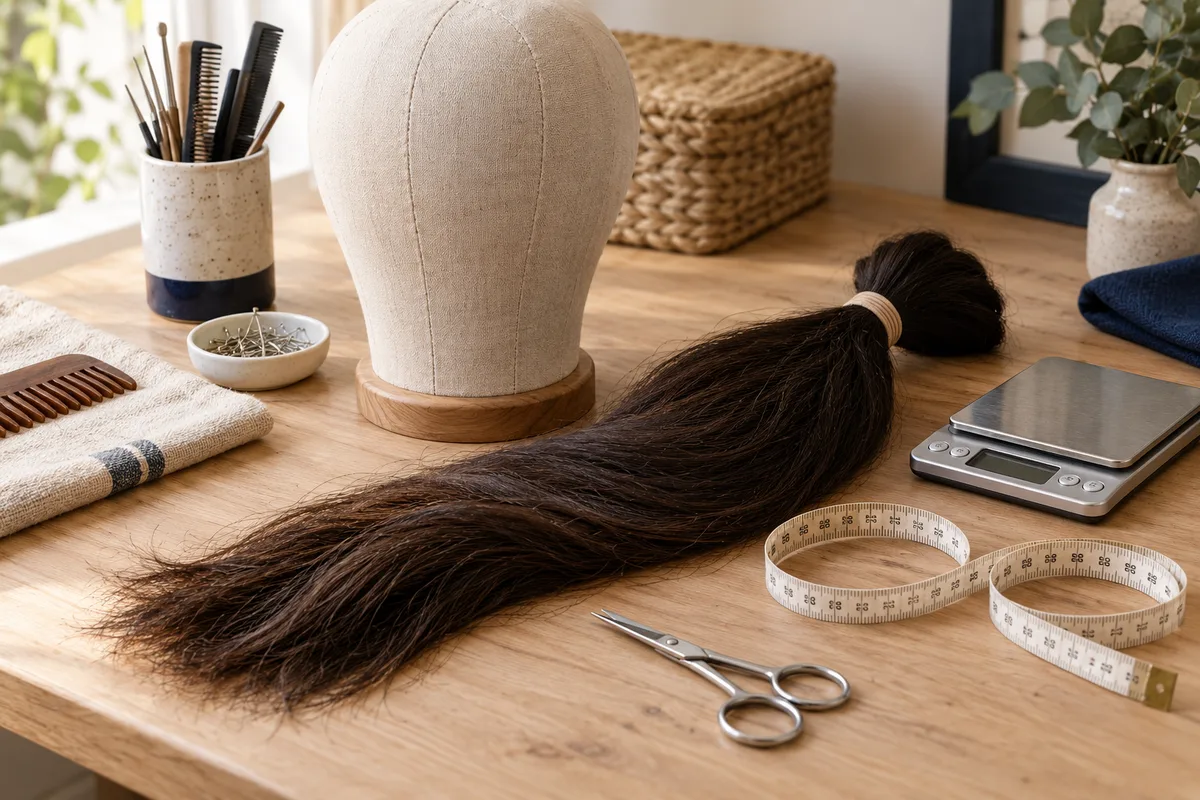
An attractive ponytail is not automatically the right material for every wig-making project. The useful question is whether the hair meets the requirements of the piece you intend to make. Start with those requirements, then use the advert and your conversation with the seller to fill the gaps. Browse BuyAndSellHair to explore the marketplace and its selling guides.
If you are commissioning a wig rather than making it yourself, ask your wig maker what they can use before purchasing hair. Avoid buying first and hoping they can adapt the material to a different specification later.
Write a buying brief before browsing
Decide what usable length, quantity, colour and texture your project requires. Think about whether you need one consistent bundle or are prepared to assess several compatible sources. If the project needs processing, do not assume an unknown treatment history will be suitable.
Keep the brief alongside current human hair listings. An advert outside your length or treatment requirements is not necessarily a bargain, even if its asking price looks attractive. The cost of preparing unsuitable material may change the comparison.
Distinguish longest length from usable supply
Ask where the length was measured from, whether it describes natural fall or gently extended curls, and how much layering or taper is present. A photograph of one longest strand does not explain how much hair reaches that length.
For uncut hair, confirm the proposed cutting point. For a cut bundle, request a clear full-length view with its secured end visible. If you need a specific usable length for your construction method, explain that requirement rather than assuming the seller will interpret a number in the same way.
Get the quantity in the right form
Weight, circumference and photographs answer different questions. An uncut ponytail's circumference can help describe fullness, but it is not a measured bundle weight. If the seller quotes a cut weight, ask whether it includes ties or packaging.
Your project's quantity requirement should come from your own method or wig maker. Do not rely on a universal claim that any ponytail will make a whole wig. If several bundles are needed, consider variation in colour, texture and useful length before agreeing each purchase.
Ask about treatments directly
Confirm dye, bleach, chemical straightening or perming, and relevant regular styling. A label such as natural or Remy does not answer every treatment question. Our guide to virgin, dyed and Remy hair explains why history and cuticle direction are separate issues.
Request daylight photos that show both the main length and ends. Explain any requirement for unprocessed hair before negotiating price. If the seller is uncertain about an old treatment within the offered length, keep that uncertainty in your assessment rather than converting it into a confident product claim.
Agree how an uncut ponytail will be supplied
Discuss securing and cutting arrangements before an appointment. Make clear whether you require an intact, oriented bundle and how you want the cut end identified. Agree any preparation with the seller and their hairdresser; do not leave washing, products or packaging to assumption.
Set a reasonable timeline and what happens if the final cut length or weight differs from what you need. If hair is already cut, assess the bundle as it exists instead of asking for preparation that can no longer be carried out.
Put the transaction together in one conversation
Confirm the exact hair, amount, currency, delivery cost, destination, payment method and dispatch plan. Your BuyAndSellHair inbox keeps the exchange in one place. Membership gives you site access; it is not the purchase price of the hair or a certification of the seller's material.
Read the buyer's checklist before paying. When the parcel arrives, compare it with the agreed description before cutting, colouring or constructing with it. Photograph any material discrepancy and contact the seller promptly so the record remains clear.
A precise brief and a patient conversation help you choose hair for the job you actually have—not simply the photograph you like most.