
Virgin, Dyed and Remy Hair: What Buyers Need to Know
Understand the difference between treatment history and hair alignment, and describe a ponytail in terms a buyer can actually assess.
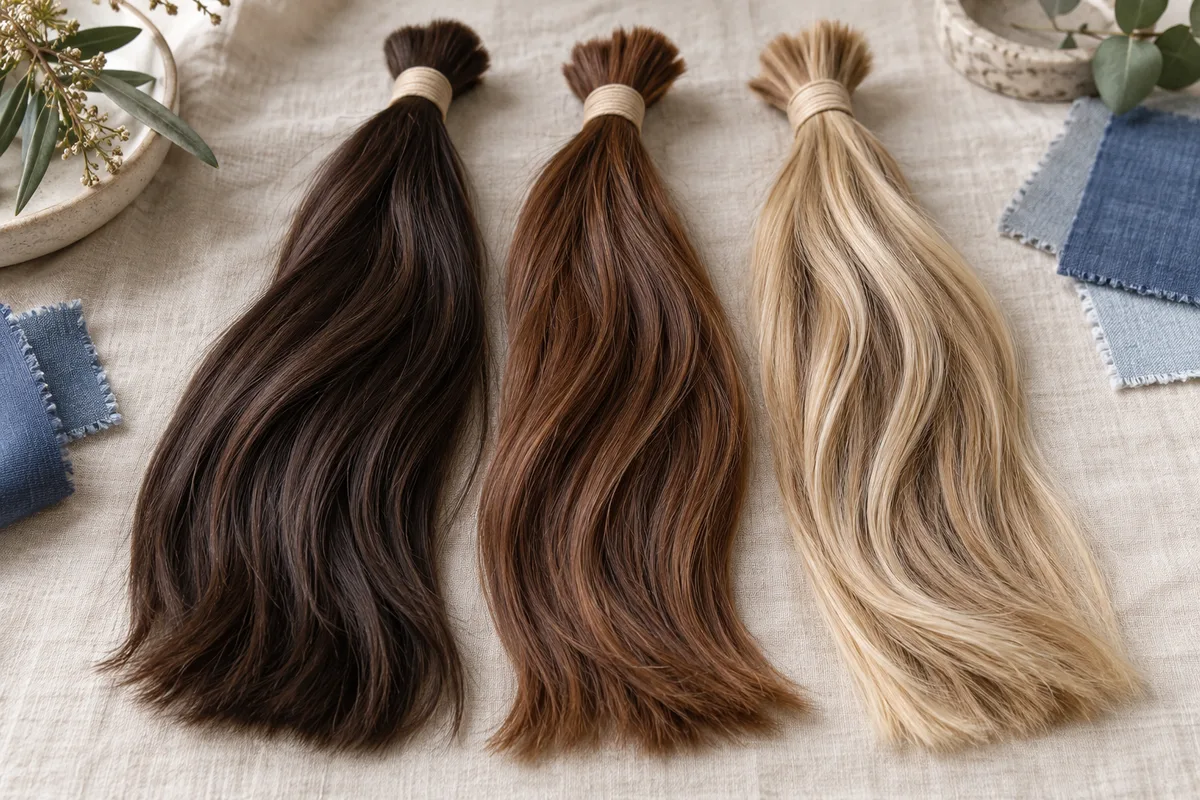
Hair adverts often use words such as virgin, natural and Remy as though they mean the same thing. They do not. A buyer needs to know both what has happened to the hair and what form it will arrive in. A precise description is more useful than a collection of impressive-sounding labels.
Whether you want to buy human hair or sell your hair, start with the facts you can explain: treatment history, length, texture, cut status and how the bundle has been secured.
Virgin describes treatment history
Virgin generally means hair that has not been chemically processed, such as with dye, bleach, a perm or a chemical straightening treatment. Buyers may use the term differently, so list the actual history instead of relying on the label alone.
Regular heat styling, the condition of the ends and everyday care are separate useful details. Hair can have its natural colour without meeting a buyer's particular requirement for untreated hair. If you are unsure whether an older treatment remains within the length being sold, explain that uncertainty rather than confidently calling it virgin.
Dyed hair can still have a buyer
Do not assume a treatment makes the hair unsellable, or that every buyer wants the same thing. Some projects need untreated hair; others may accept colour-treated hair that meets their requirements. The buyer must decide whether your particular hair suits the intended use.
Say what was done and roughly when: an all-over colour, highlights, bleach, a perm or another chemical treatment. Explain whether the offered length contains more than one treatment or visible regrowth. Photos should show the colour as clearly as possible, but a photograph cannot substitute for the history.
Remy is about direction, not just colour
In the wig and extension trade, Remy refers to hair with cuticles aligned in the same direction. For example, HairUWear describes its Remy hair as cuticle-aligned. That is a different question from whether the hair has been dyed: Remy does not automatically mean virgin.
For a privately sold ponytail, the useful information is often simpler: was it secured before cutting, are the root and tip ends distinguishable, and has the bundle stayed together? Do not promise professional processing or a certified grade just because the hair came from one person.
Keep a cut bundle's orientation clear
Discuss securing and cutting requirements with the buyer before the appointment. Keep the cut end identifiable and the bundle together; avoid gathering loose mixed strands and presenting them as a neatly preserved ponytail. If the hair is already cut and its direction or history is uncertain, say so.
Buyers should request a photograph of the whole bundle and its secured end. That shows how it is presented, but it cannot certify every strand's cuticle condition. Ask practical questions, rather than treating an attractive product label as proof.
Replace vague labels with a useful description
A description might say: “Natural brown, wavy hair. No dye, bleach or chemical straightening. Occasional heat styling. Currently uncut; the offered length will be measured from the agreed cutting point.” Use that structure for your own real details, not as a claim to copy regardless of your history.
For treated hair, explain the treatment directly. Avoid claims such as “will never tangle” or “perfect for every wig”. Length, fullness, layers and end condition still matter, whatever label you use. See the pricing guide for a practical way to compare similar offers.
Ask the questions that match your project
Before buying, establish whether you need untreated hair, a particular colour, a certain usable length or a secured cut bundle. If a seller's treatment history is unclear, resolve it before payment or cutting. Our buyer's checklist helps you put the main requirements into one conversation.
Before selling, write down what you know honestly and use current photos. Accurate detail helps an interested buyer make a decision—and gives you a better starting point for agreeing the sale.